Choosing the Right Solar Inverter for Your Power System
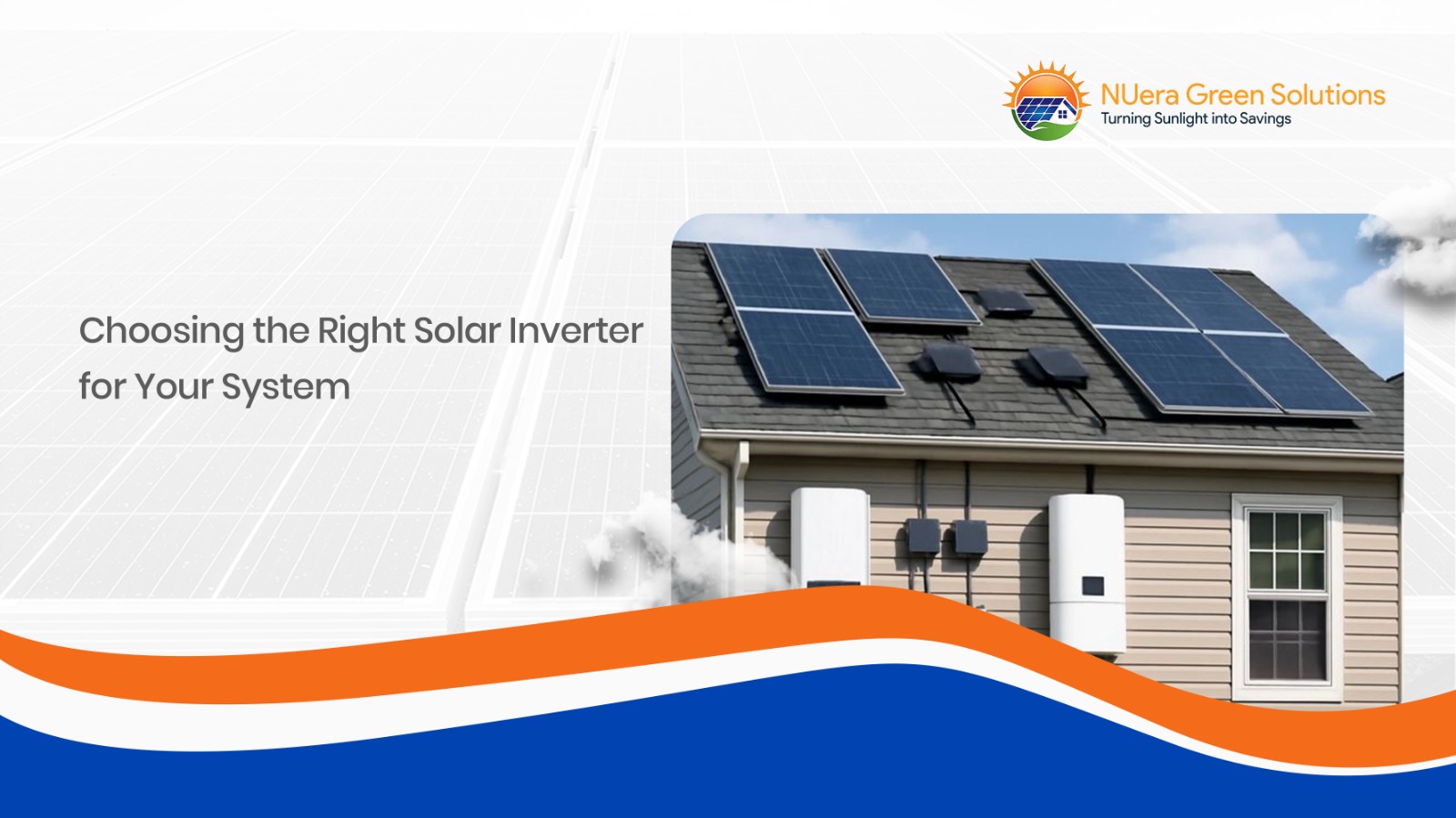
The most important element of a solar power system is the solar inverter. Although the solar panels use the sun rays to produce electricity, it is the inverter that will convert this energy into usable electricity either at your home or business. The inverter should be selected well in that it has to be efficient, safe and capable of lasting long whilst a bad choice can result in less energy being produced by the inverter and also breakdowns frequently occurring. The kind of inverters and their size and quality are other issues that an individual should consider before making the decision.
The Solar Inverter: The mechanism.
It does much more than the fact that a solar inverter transforms DC electricity on panels and makes it accessible in an AC electricity supply to the appliances. The new inverters are power flow controllable and utilize the power to maximum possible through the Maximum Power Point Tracking (MPPT), system monitoring and system protection (anti-islanding, fault protection). The failure of the inverter would result in the failure of the whole solar system even in cases where the panels are available. This contributes to the reliability of the inverters being as significant as the quality of panels.
On-grid Inverter, Off-grid Inverter and Hybrid Inverter.
The identification of the appropriate group where one has a system is the first stage in the process of choosing an inverter.
On-grid inverters have also been created to make use of the utility grid and are battery-free. They provide solar power during the day, and sell surplus power at the grid where net metering is provided. Such kinds of inverters are affordable and can be used in the regions where there is constant power supply at the grid, but where there is power issue they are turned off due to safety reasons.
Off-grid inverters are designed for standalone systems that are not connected to the utility grid. They work with battery banks to store excess energy for use during nighttime or cloudy days. These inverters are essential for remote locations or areas with unreliable grid supply.
Hybrid inverters combine the features of both on-grid and off-grid systems. They can connect to the grid while also having battery backup capability, providing the best of both worlds - grid connectivity with backup power during outages.
String Inverters, Microinverters and Optimizers.
Much performance in the system depends on the inverter architecture as well.
The most widespread and the cheapest is the string inverters. Several panels are joined back-to-back to a single inverter. They would be able to perform well in cases where equal measures of sunlight are subjected to the panels. One of the panels can be shaded or perform poorly hence production can be reduced through the string.
Each panel comes with microinverters and this means that it is independent of the rest. The design avoids loss of shading and enhances performance on more complicated roofs that are multi oriented. Their warranty is broader and their surveillance is broader and more expensive.
Power optimizers work in conjunction with string inverters, providing panel-level optimization. They maximize the output of each panel individually while still using a central inverter, offering a middle ground between string and microinverter systems.
Inverter Size and Technical Specifications.
Inverters must be of the right size. The inverter size is normally scaled to 80-100 percent of solar panel capacities. The oversizing of the panels is kept to a minimum to ensure that the panels can be useful throughout the day when there is little sunshine, but too much oversizing will cause power clipping and power wastage. Always remember to check on voltage scale, MPPT capacity, number of MPPT input and additional capacity to add more inputs. In the hybrid systems, the compatibility of battery and backup load capacity should be considered.
Efficiency, Construction and Warranty.
The inverters are subjected to heat, dust and working conditions all the time hence quality of construction is of essence. Select inverters, which are highly efficient, which are well-thermally controlled and with a prolonged proven service. Cheap inverters can be relatively cheap at the beginning of the day but according to the long-term perspective, they will not last long at a higher cost. Warranty cover is also a matter of concern. String and microinverters have 5-10 and 20-25 years standard warranty respectively. Timely solutions to the problems should be provided by offering the local services with a great force.
Conclusion
The right solar inverter will be required to be a compromise between nature of the system, the roof environment, cost, and the durability. The cheapest inverter is not the best but the one that fits in your system design, works reliably and one that is supported by a great warranty on top of service. An efficient and reliable solar investment in the long term will be made possible by a chosen inverter.